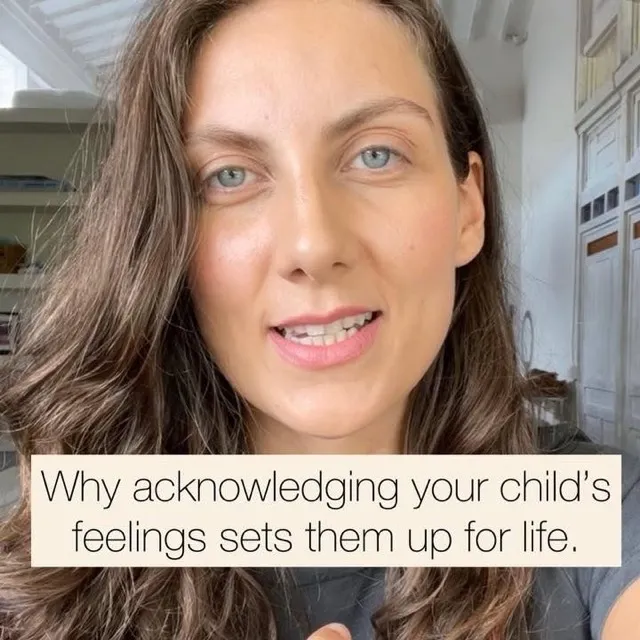
18-month-old Ari is happily playing on the slide when Mommy announces that it’s time to go home for dinner. As she tries to help Ari down from the slide he protests and starts flailing his arms and kicking his legs. At this moment, rather than becoming more stern, yelling, or worrying about this behaviour, his mom will have more success getting Ari home by acknowledging the fact that she understands why Ari is upset—Ari isn’t ready to leave the park, he loves sliding down, and wants to keep playing!
This approach to our children’s upset reactions is called acknowledging feelings, and it is truly transformative. If you haven’t started incorporating this way of communicating with your little one, then congratulations, your life is about to change for the better!
“One of the most ironically counterintuitive twists of parenting is this: the more we welcome our children’s displeasure, the happier everyone in our household will be, there is no greater gift to our children and ourselves than complete acceptance of their negative feelings. (Notice I did not say ‘behaviours’.)”
Writes respectful parenting expert Janet Lansbury.
Not only does Janet articulate so beautifully what an incredible gift welcoming, accepting and validating negative feelings is for our children and ourselves, but she also captures how counterintuitive it can actually feel for us parents to start welcoming our children’s upset reactions!
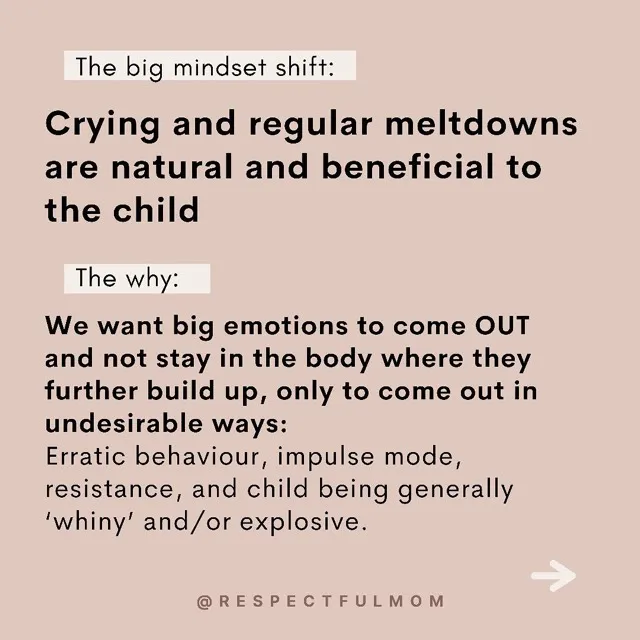
The worry most parents have is that acknowledging negative feelings actually creates more negative feelings. That when we reflect back to our children with empathy, for example when we say something like “I can see you are very upset you really wanted that strawberry ice-cream at the store” we are actually introducing the concept and encouraging their “want for an ice-cream” But the twist here is that in reality it actually has the opposite effect. When we reflect back to them with understanding, step into their fantasy and acknowledge their “want”, it actually helps our children release the feelings, move on and become much more able to accept our limits in the process.
Acknowledging feelings is such a transformative communication tool that once parents start to do it, they’ll wonder how they ever operated differently. Once you go through the mindset shift of seeing the expression of negative feelings as good, healthy and even necessary for our kids’ emotional health and inner peace, there is simply no way you’ll ever go back!
Here are 5 reasons why acknowledging feelings is so profound:
- It has a calming effect and strengthens the relationship.
Verbalizing acceptance of our children’s emotions is a key to helping them feel loved and understood. Acknowledging disappointments out loud makes them feel heard and respected and strengthens the relationship in a profound way. It has usually calming effect when our children understand that they have indeed gotten their message across and know that we truly value their feelings. - It invites cooperation
Remember: Acknowledging and accepting feelings does not mean we accept our children’s off-track behaviour. See, we can set all the boundaries that our children need, and hold those boundaries, at the same time as we can empathise fully with their disappointment, frustration or anger. And this is truly key because connecting while we set the limit reduces our children’s need to push back and ultimately makes it easier for our children accept our limits. When we acknowledge feelings our children are much more likely to see the sense and fairness in our rules and limits and choose to cooperate and be on our side. - Emotional intelligence
Another beautiful outcome of approaching our children in this way is that it helps assist the child toward a better self-understanding and emotional intelligence. By reflecting back to them with understanding what they might be feeling we are essentially teaching them the language of emotions.
Children often experience a swirl of emotions inside and do not necessarily know what is happening. When you sportscast and put emotions into words in different situations, for instance, “I see you seem very disappointed that we’re not able to I said you go to the party, the child will feel calmer.” As our children grow up they will start to internalize this way of working with emotions. - Knowing that it’s normal and OK to experience negative emotions sets them up for life.
In my opinion one of the most valuable gift we can give our children is to let them know that negative emotions are just as natural and normal as positive ones, that it’s truly OK to sometimes feel bad! Frustration, anger, upsets, sadness and disappointment are all part of being human and the best way to deal with all emotions is to express them as best we can and let them pass.
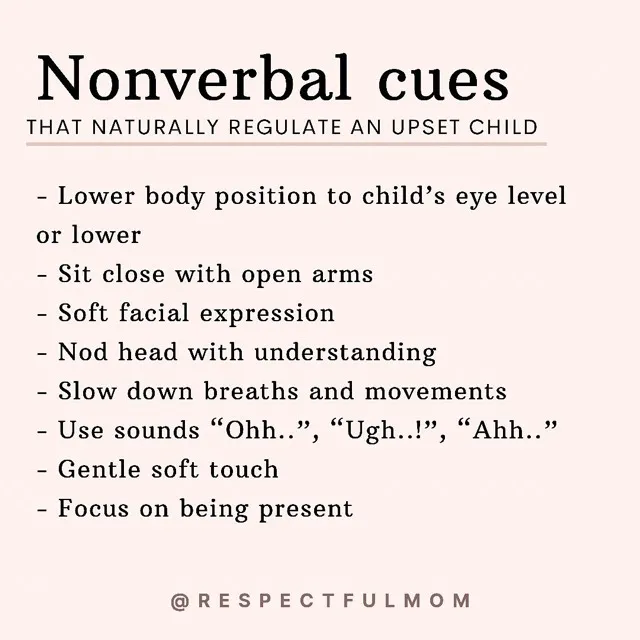
The very best way to teach our children emotional regulation is to stay calm ourselves when the storm hits and be ready to lovingly wait it out with them. - Building trust and communicating our unconditional love.
Being able to “handle” even their worst sides in a calm yet confident way builds incredibly deep trust. It proves to our children that we love them and are ready to support them no matter what: “You can show me your worst sides and I will still love you”.
I don’t know about you but that is one of single most important message I want to consistently communicate to my children.
If you lost it too
“Wow, I got so mad just now. I’m sorry I yelled at you, that must have been scary. Everyone feels frustrated sometimes and that’s okay, but it’s never okay for me to yell like that. I’m going to try my best to do better next time. I’m sorry, I love you.”
And for you: A good parent is not one who never loses their patience. A good parent is one who apologises when they do.
More on this: How to Stop Yelling.
Questions parents ask
What do I say to acknowledge my child’s feelings?
Say back to them what they wanted, with understanding:
“You wanted a treat and I said no. It can be upsetting not to get what you want.”
“It’s hard for you to stop playing and come to dinner, but it’s time now.”
“You’re so disappointed that it’s raining.”
“You want to stay up later like the big kids, I know.”
Does acknowledging feelings make a tantrum worse?
That is the worry most parents have. But in reality it has the opposite effect. When we reflect back to our children with understanding, it helps them release the feelings, move on and become much more able to accept our limits.
Does acknowledging feelings mean giving in?
No. Acknowledging and accepting feelings does not mean we accept the behaviour. We can set all the limits our children need, and hold them, at the same time as we empathise fully with their disappointment, frustration or anger.