Rewarding children’s behaviour is something many of us don’t question at first. It’s familiar. It’s what we grew up with. “Good job,” gold stars, sticker charts, and the ever-present “If you do this, then you’ll get that.” These patterns were so normalised in our own childhoods that they often become the default in our parenting without much thought. And in many ways, it makes sense, because on the surface, they seem to work. Children cooperate, behaviours improve, and things can feel more manageable in the moment.
But when we begin to look a little more closely, a different question starts to emerge. Not whether rewards work, but what they are actually teaching.
What they are actually teaching
Because when a child’s behaviour becomes tied to a reward, their focus subtly shifts. Instead of engaging in an activity for the sake of the experience, the learning, or the connection, they begin to orient themselves toward the outcome. The question becomes less about “What am I doing?” and more about “What will I get?” Over time, this shift can quietly replace something much more meaningful, the development of intrinsic motivation. That inner drive to participate, contribute, and engage simply because it feels right, interesting, or satisfying from within.
And this is where things become important to consider. Because most of us don’t actually want children who behave well only when there is something to gain. We want children who develop an internal sense of responsibility, empathy, and awareness. Children who make thoughtful choices not because they are being watched, rewarded, or evaluated, but because those choices align with something they feel and understand internally.
A similar dynamic can be seen with punishments. While they may stop a behaviour in the moment, they often do so by introducing fear, pressure, or disconnection. The child may comply, but the learning is not necessarily rooted in understanding, it’s rooted in avoidance. And while that can look effective on the outside, it doesn’t necessarily support the development of a strong internal compass. What we’re ultimately aiming for is not compliance, but connection, and from that connection, the capacity for thoughtful behaviour grows.
This is not a black-and-white conversation
At the same time, this is not a black-and-white conversation. There is nuance here. We all enjoy moments of celebration, acknowledgment, and small pleasures in our lives. After a difficult week, I might take myself out for a gelato or go for a long walk somewhere beautiful, not because I earned it in a transactional sense, but because I want to mark the experience, to care for myself in a small and meaningful way. And I do the same with my children. There are moments where we go somewhere special, share a treat, or do something out of the ordinary simply because it feels right.
But those moments are not tied to performance. They are not conditional. They are not something my child must earn by behaving a certain way. They are part of our relationship, part of our shared life, part of what it means to experience joy together. And that distinction, between a reward and a shared experience, is subtle, but incredibly important.
Because when rewards are consistently tied to behaviour, children begin to expect them. Of course they do, we are wiring them to. And over time, the original intention behind the behaviour becomes less relevant than the reward attached to it. The helping, the effort, the participation, those things become secondary. And in that process, we can lose sight of what we were hoping to nurture in the first place.
If you’ve been using rewards
If you’ve been using rewards, this is not about doing something wrong. It simply means you are working within a framework that most of us were given. And if you’re beginning to question it, that’s not a sign of failure, it’s a sign of awareness. There’s no need to abruptly remove everything, especially if your child has come to rely on that structure. Sudden changes can feel confusing and even unsettling. Instead, this shift can be gradual. Gentle. Intentional.
You might begin by creating a little more space between behaviour and reward. Or by transitioning from tangible rewards to shared experiences. Or by simply observing when your child is no longer seeking the reward in the same way and allowing things to naturally evolve from there. This is not about perfection. It’s about becoming more attuned, to your child, to yourself, and to the dynamic between you.
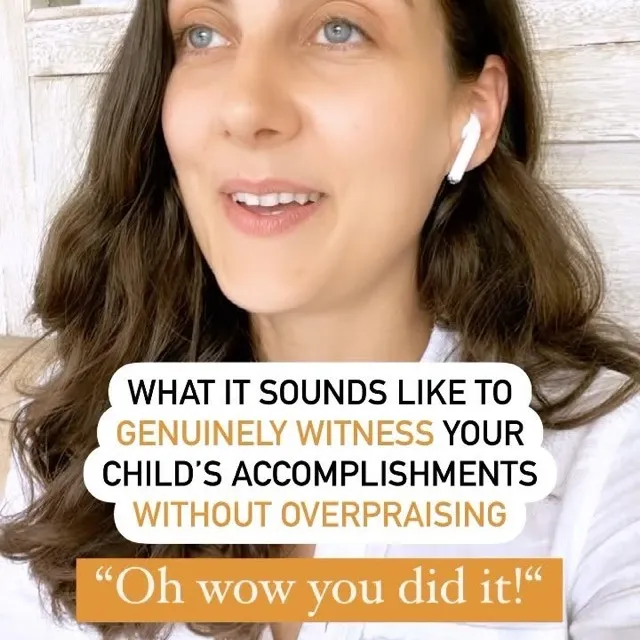
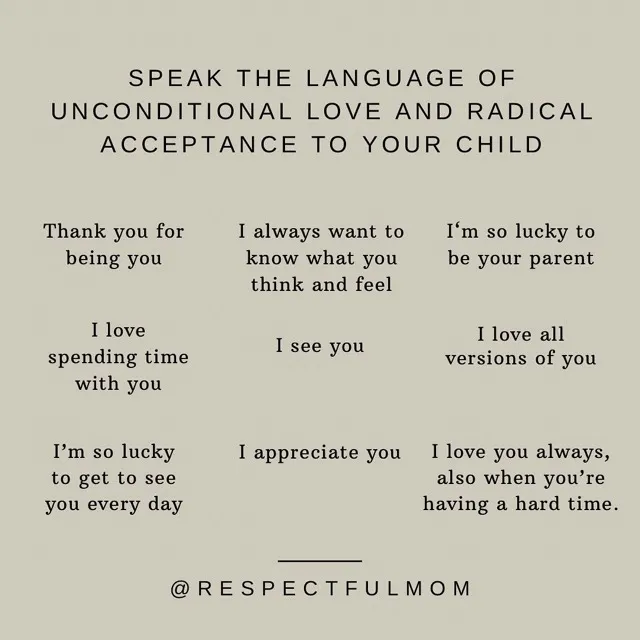
One of the most meaningful shifts we can make in this process is toward genuine acknowledgment. Not exaggerated praise or constant affirmation, but simple, sincere noticing. Letting a child know you see their effort. That you appreciate their contribution. That their actions have impact. These moments of acknowledgment don’t create dependency, they deepen connection. And for many children, that sense of being seen and understood is far more motivating than any external reward could ever be.
It’s also worth remembering that young children live very much in the present moment. A promised reward later often holds far less meaning than a felt experience now. A warm response, a moment of shared attention, a genuine “thank you”, these are immediate, relational, and meaningful in ways that delayed rewards often are not.
And when we think about motivation more broadly, even in our own adult lives, it becomes clear that the most meaningful engagement rarely comes from external rewards alone. Yes, we work for paychecks, but the deeper satisfaction in our lives tends to come from something else, purpose, connection, creativity, contribution. We do things because they matter to us, because we want to, because they feel aligned. Even when they’re difficult.
And that is ultimately what we are trying to support in our children.
This doesn’t mean rewards will never exist. It means they are no longer the foundation. They are no longer the primary tool used to guide behaviour. Because it is entirely possible to raise children who are thoughtful, motivated, emotionally aware, and deeply connected without relying on reward systems.
This is not about removing something from your parenting. It’s about making space for something deeper. For trust. For relationship. For a kind of motivation that doesn’t depend on what is being offered from the outside, but grows steadily from within.
And that kind of motivation stays.
Questions parents ask
Do reward charts work for toddlers?
On the surface, they seem to work. Children cooperate, behaviours improve, and things can feel more manageable in the moment. But when rewards are consistently tied to behaviour, children begin to expect them, and over time the original intention behind the behaviour becomes less relevant than the reward attached to it.
What can I do instead of rewards?
One of the most meaningful shifts we can make is toward genuine acknowledgment. Not exaggerated praise or constant affirmation, but simple, sincere noticing. Letting a child know you see their effort. That you appreciate their contribution. That their actions have impact.
How do I stop using a sticker chart?
There’s no need to abruptly remove everything, especially if your child has come to rely on that structure. This shift can be gradual. You might begin by creating a little more space between behaviour and reward. Or by transitioning from tangible rewards to shared experiences.
Is it OK to give my child a treat?
Of course! There are moments where we go somewhere special, share a treat, or do something out of the ordinary simply because it feels right. But those moments are not tied to performance. They are not something my child must earn by behaving a certain way. I would even hesitate to call these moments ‘getting a treat’, because the word ‘treat’ suggests a reward.